Wednesday, November 24, 2010

Week 13

Week 13

First of all, I would like to say that I hope everyone has a Happy Thanksgiving! It is crazy to me that this is our last blog, but I can honestly say that I have gained such knowledge and perspective from this class. When I first signed up for this class, I was very scared and nervous to take it because I read the reviews saying how hard it was and that it was a "GPA decreaser".

Whether or not I get an A in this class doesn't really matter to me because I can definitely say that I know so much more about HIV and what it does to an individual the moment they get their positive test result back. This class has pushed us to look at HIV through non biased or opinionated glasses, which I am very thankful for. Coming from a small town where HIV was never talked about, I greatly appreciate being able to take a course like this.

We should be thankful to UCF for actually having this class because we got to be a part of something that very few people have. By blogging to you, my peers, I have been able to freely express my opinions, questions, and thoughts about HIV and AIDS. I would like to thank you all for reading and for your perspectives as well. I have really enjoyed taking this class with you all.

Did You Know?
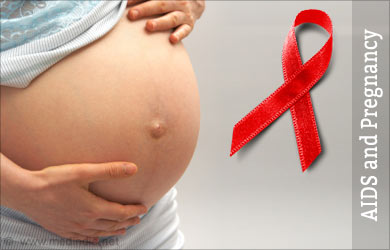


"In 2005, the Florida legislature revised the statute regarding HIV testing of pregnant women (s.384.31, F.S.). The law eliminated the requirement for a separate HIV consent and the testing was broadened to include other STDs. Pregnant women must now be notified that they will be tested for HIV, syphilis, Chlamydia, gonorrhea, and hepatitis B (at the initial visit and 28-32 weeks) and that they have the right to refuse any or all tests. Women who opt out of testing must sign a statement of objection. " (Florida Department of Health)

Reference
Women and Children: The Perinatal HIV Program.(2010) Florida Department of Health. Retrieved on November 24, 2010 from http://www.doh.state.fl.us/disease_ctrl/aids/perinatal/perinatal.html

Wednesday, November 17, 2010

Week 12

Week 12

 This week at work, I got floated down into the Emergency Room both nights. It was my first time being down there, and I have to give those guys credit. I thought that being on the floors was fast paced, but being down there really took a LOT of energy. The first night, I realized that the most important task is getting patients in and getting them out as fast as possible. I was wore out by 2 o'clock in the morning.

However, the second night was one of the most unforgettable nights I have ever had working in the hospital. A woman who was about 5 months pregnant came in because she was having severe cramping, and she shared with me that she was HIV positive and had only found out because she took a mandatory HIV test at her first OBGYN  appointment. I had known about her condition prior to me talking to her because her nurse had told me, but it was still shocking to hear when it came out of her mouth. I asked her if her and her baby were getting treated and she said yes, but that it still didn't mean that she wasn't scared.

I told her that I was taking this class and that she found out at a good time. She said that her pregnancy was a surprise and unplanned, and I told her that it was really a blessing because otherwise she might not know about her condition until it is too late. My heart really felt for her because she was all alone. It then occured to me that I still had Diane's (The nurse that took my HIV test at the Health Department) business card in my wallet. I ran upstairs to get it, but by the time I got back, she was gone. I felt so dissapointed because I knew that I could have just given her my number, but I just didn't feel like it was my place at the time. I just hope that this young woman will have someone to stand by her side.

Did You Know?
A patient holds antiretroviral (ARV) drugs used to suppress the HIV virus and stop the progression of HIV disease

 "Currently there are 16 drug products approved by the FDA for the treatment of adult HIV infection. Through major contributions by the Pediatric ACTG, 10 antiretroviral agents have pediatric label information, including 3 protease inhibitors."
Source:
Riley, L.E. and Green, M.F. Elective caesarean delivery to reduce the transmission of HIV. 1999. N Engl J Med 340:13, 1032.

Wednesday, November 10, 2010

Week 11

Week 11

         After the M&M simulation, I really got an idea what a person has to deal with the moment they get diagnosed with AIDS or are HIV positive. The simulation really proves how it isn't just "take your pills" and you'll be fine. I really don't think people see how difficult it is to have to take sixteen plus pills every day that make you feel sick at times and have to carefully planned out in accordance with whether they have to be taken with food or not.
         The M&M simulation was also very real to me because I had gone to take my HIV test at the beginning of that same week. Taking that test was something that I will never forget. In a sense, I felt dirty going in there. Once the nurse kept asking me whether I had unprotected sex in the past year, I answered yes, and told her, "But, I am married." She replied with, "Married or not married, you could still get HIV." I told her that we had both waited until we were married to have sex, and she looked at me like she was in disbelief. I knew she didn't believe me because she asked if I wanted to be tested for chlamydia right after. I understand why they have to ask because I remember the woman from the Women's Panel that got HIV through her husband, but I just couldn't help but feel a little discouraged.
         When I left that day, I remember thinking that this was one of the reasons why I had waited to have sex until I was married; I never wanted to have to go through this. I am not writing this to teach or to brag by any means at all. It was just ironic to me a little bit to have to go through it anyways due to this class!

Did You Know?


Symptoms of children with AIDS include lymph nodes (like the child in the picture) that remain enlarged for more than 3 months, lack of energy, weight loss, requent fevers and sweats, persistent and frequent oral/vaginal yest infections, skin rashes or flaky sins, pelvic inflammatory disease that does not respont to treatment, short-term memory loss.

Reference

Children's Hospital Boston. (2010). AIDS/HIV. Retrieved on November 10, 2010 from http://www.childrenshospital.org/az/Site550/mainpageS550P0.html

Wednesday, November 3, 2010

Week 10

Week 10
            This week, my mind has really been set to thinking about a conversation that I had with the guidance counselor from my high school. I saw him on Sunday, and he was asking me how school was going. I told him how I will be graduating next month, and of all my classes this term, my HIV Class has really taught me the most. I was shocked when he asked me, “Is HIV really that bad still?”
            The sincerity in his question made me cringe. I thought, “No wonder I never learned about HIV or AIDS in high school. The school’s very own guidance counselor knew nothing about it. There has got to be HIV awareness taught in schools, especially high school where experimenting with drugs and sex is present every day. There is something awfully wrong about this picture.
            When I went to get tested for HIV last week at the Lake County Health Department, which is right down the road from Umatilla High School, I had asked the woman giving the test if there were a lot of teenagers coming in to get tested. She said that when teenagers did come in, they had no idea what HIV was. She said many of them considered it an STD that could be cleared up with the proper medications. She said that the HugMe Clinic in Lake County has been begging to able to meet with the local schools, but they get denied every time.
            After my old guidance counselor asked me that question, I began to tell him everything that I knew about HIV. I told him how important it was that HIV awareness gets into high schools and middle schools because its presence is increasing by thousands every day. I am pretty sure that I got through to him that it wasn’t until I got to college that I was really informed about the severity of HIV. If it wasn’t for this class, I could have been caught asking a ridiculous question like him!

Did You Know?

“Without therapy, about 20% of HIV-infected babies developed an AIDS-defining condition prior to 2 years of age. Only about 5% of HIV-infected children reach their teen years without any apparent symptoms of HIV infection.”
(This was an article about 20 children with HIV)
Luzuriaga, K. M.D. (March, 2001). “Life Span of HIV Newborn According to NPHRC”. The Body: The Complete HIV/AIDS Resource. Retrieved on November 3, 2010 from http://www.thebody.com/Forums/AIDS/Children/Current/Q14370.qna

Wednesday, October 27, 2010

Week 9

This week, I have started a survey on my facebook, polling my friends/family about this week's Question of the Week. Although I am not going to share those results until next week, I have found it interesting that they had so many questions before being able to give their answer about whether a single, HIV positive mother should have a child or not. I was actually happy about this because I hate when people jump to state their opinions before researching their facts. I didn't share with them until they asked what Zidovudine was, because I wanted to see how many people actually knew about it, but noone knew. Another interesting comment that I got was that on General Hospital about a year ago, a character was placed in this situation, and the show actually informed its audience about how prevent perinatal transmission. I thought it was great to see shows actually educate their audiences about HIV while trying to entertain them at the same time.

To my suprise, however, most of the people surveyed were paying too much attention on "how" the mother got HIV. They were very nervous to state their opinions until after I told them that I couldn't state how the mother got infected and to think of her as a close friend. Even though this is only a hypothetical scenario, it reallly baffles me to know that people think they have the right to know about someone's personal life like that. I don't think the question is "How did someone get HIV?" in this case. I believe the question at hand is ,"How is this person moving forward despite the fact that they have  HIV?".I am just really surprised that I have had about 40 hits on my survery within 2 hours, and people aren't afraid to state their opininos or comments. I am actually pretty excited to hear what they have to say.

This class keeps giving me confidence to talk about HIV and an interest of how to spread the word in order to prevent HIV. I also wanted to note that I really learned alot from the Women's Panel last Wednesday night. It really taught me that living with HIV isn't a death sentence anymore because those women just looked like ordinary people. I also had a question about something one woman had said. She mentioned that she went through a period of "wasting". I understand that you lose a lot of weight, but I really don't understand the process behind it, and I didn't want to sound like an idiot in front of the whole class! Is it from all of the diarrhea and vomiting?

Did You Know?


"Wasting during pregnancy can increase the risk of mother-to-child HIV transmission." If the HIV positive mother does not gain weight, her baby is at risk even if preventative drugs were given! (Villamor, 2005)

Source:

Villamor, E., Saathoff E., Msamanga, G., O'Brien, ME., Manji K., and Fawzi, WW. "Wasting During Pregnancy Increases the Risk of Mother-to-Child HIV-1 Transmission. (April 15, 2005). PubMed. Retrieved October 27, 2010 from http://www.ncbi.nlm.nih.gov/pubmed/15793376

Wednesday, October 20, 2010

Week 8

Week Eight
It is crazy to me that it has already two months since my first blog. The past two weeks of work at the hospital have really helped me figure out where I want to be in the medical field. I always thought that I wanted to work with pediatrics, but my job has given insight to a completely different area of the hospital: the Intensive Care Unit. For some reason, I have floated down to ICU and IMCU for the past two weeks, and I have really enjoyed it.
The first week, I was definitely scared to be in a room by myself. Seeing nonresponsive patients and responsive patients on ventilators really helped me picture what the doctor in the book The Least of these My Brethren had to see every day. When I saw my first nonresponsive patient on life support, it was a lot more “real” than I could picture in a book or on television. I finally understood why my mother is so insistent on being a DNR patient. Life support patients have such a peace to them, but it isn’t because they look comfortable or like they are getting better. THEY LOOK DEAD! Even though they get discharged to another healthcare center after a week or so of being on life support, I can’t imagine having to be dependent on a machine having my family have to worry about visiting my vegetable-state body.
Furthermore, I finally got to be a part of a code blue. I heard the “cracking” of ribs on patient who didn’t make it, and the doctors knew that this particular patient wasn’t going to survive a full resuscitation. I could feel the hesitation in the room of the nurses who tried to convince the family to fill out a DNR form, but insisted that the hospital do everything that they could on their family member. I finally felt like I could relate to the doctor of the AIDS ward in the book who didn’t want to see patients suffer before they died if was unnecessary. I just felt so bad for this patient when I saw his dead body that was in horrible shape compared to what it looked like before. I know that family members want to believe that they are going to see a miracle take place, and maybe I will be in this situation one day, but I don’t want to be selfish about it.
These situations are inevitable in critical care units, and I never even thought about working in this particular field. I have never come home from work feeling as excited to go back. I always heard on the other floors that” critical care units are awful because you have to do more work.” Isn’t that why we get paid?

Did You Know?

"The number of cumulative AIDS diagnoses for children (under the age of 13) living in Florida was 1,571." (CDC, 2008)
Source:
Basis Statistics. (2008) TheCenterforDiseaseControl. Retrieved on October 20, 2010 from http://www.cdc.gov/hiv/topics/surveillance/basic.htm#aidsage

Wednesday, October 13, 2010

Week 7

“Down Low”
I actually did get to catch a glimpse of the Oprah Show this week, and I just wanted to point out that I am very proud of the lady who was pregnant for getting the proper treatment for her pregnancy. She was a very inspiring person. Before I Google the correct term for Down Low, by watching this show, I am going to say that someone on the Down Low is hiding the fact that they are homosexual, like the man who took his wife to see his boyfriend, and she had no idea that he was gay. It seems like these men and women are scared to come out and admit their sexual preferences or tendencies to the world. Therefore, they prefer to keep it to themselves. I know Wikipedia is not the best source, but it was the only website where I could find an actual definition. Therefore, according to Wikipedia, Down Low refers to “Men who identify as straight, but have sex with men (often a friend) on the side without disclosing this to their female partner.” (Wikipedia, 2010)

Source:
Down Low.


Week 7 Blog
This Monday, I was in the waiting room at a doctor’s office, and the Tyra Banks Show was on. The show had about 7 teenagers under the age of 15, five of which were sexually active and have had more than 5 partners. While these numbers were shocking for me to hear for such young people, it shocked me even more that not one of them knew about HIV or AIDS. They knew about sexually transmitted diseases, but they just thought they would have to get medicine for them and then they would be ok. In my mind, I just kept thinking that one of them had to have HIV because they were having sex unprotected.

It is amazing to me how teenagers in the United States do not know about HIV. They had all taken the Sex-Ed classes, but stated that they wished their parents would have talked to them, instead of feeling uncomfortable in a classroom. Honestly, as a Christian it is hard for me to say this, but the Abstinence Only classes have to be amended. I know this raises big controversy, but obviously they aren’t working in preventing the spread of sexual diseases. If Christians are scared of having their children learn about such things, they can simply take their children out for the day or they can teach their child abstinence themselves. I don’t think this issue should be the responsibility of schools, but some children aren’t blessed with parents who want to spend the time to inform them about HIV. Yes, I am a Christian, and I waited until I was married to have sex, but it isn’t because my sex-education class told me.

As I stated in my QOTW answer, I don’t want to censor my children to the point where they just want to rebel and do exactly what I kept them from. I feel that as a parent, it is my job to educate them about HIV and how it comes about. I know sex isn’t the only way to get HIV, but I know it is a big reason for its growing numbers. I would hate to one day be on a show, or even in my own living room, having to hear my child has had unprotected sex with a handful of people and has no idea what HIV is. I would feel like a failure.


Did You Know?

It is just as important for HIV children to get their vaccines just as it is for non-HIV children. “Encapsulated bacteria cause considerable illness for HIV-infected children, so Haemophilus influenzae, and pneumococcal conjugate vaccines are important. Varicella vaccine is a live virus vaccine but it can be considered safe for HIV-infected children without immuno-suppression. Measles, mumps and rubella vaccine can be safely given to HIV-infected children who do not have severe immunosuppressant.” (Children and HIV, 2009)

Children and HIV
. (2009) HIVInfoSource. Retrieved on October 13, 2010 from
(2010). Wikipedia. Retrieved on October 13, 2010 from http://en.wikipedia.org/wiki/Down-low
http://www.hivinfosource.org/hivis/hivbasics/children/#Clinical_trials.